vRealize Infrastructure Navigator: Simple Guide to Features, Mapping, and Modern Use
vRealize Infrastructure Navigator, also known as VIN, was a VMware tool that helped teams see how applications and virtual machines were connected inside a vSphere environment. Many IT systems have hidden links that are hard to understand without clear visibility. VIN made this easier by discovering applications automatically and showing how they depended on each other StufferDNB
This helped teams plan changes safely, solve problems faster, and understand their virtual infrastructure in a simple and visual way. Even though VIN is now retired, learning about it is still useful because it explains the basics of application dependency mapping and how modern VMware tools work today.
What Is vRealize Infrastructure Navigator (VIN)
vRealize Infrastructure Navigator, or VIN, was a VMware tool that helped teams see how different applications and virtual machines were connected inside a vSphere environment. VIN made it easier to understand which servers talked to each other and how applications depended on other services. It worked as a plug-in inside vCenter Server.
Simple Definition
VIN was a tool that found applications running inside VMs and created maps that showed how those applications were connected. This helped teams understand what might break if a server went down.
Purpose of vRealize Infrastructure Navigator in Virtual Environments
Virtual systems can be confusing because many parts depend on each other. VIN helped teams:
-
see hidden connections
-
plan upgrades and changes
-
understand how apps worked together
-
avoid mistakes during maintenance
-
solve problems faster
How vRealize Infrastructure Navigator Fits into the VMware Ecosystem
VIN worked closely with:
-
vCenter Server
-
ESXi hosts
-
VMware Tools
-
vSphere Web Client
Because of this, VIN could discover information without extra agents.
Why Dependency Mapping Matters
Dependency mapping is important because it helps teams:
-
avoid breaking important links
-
prepare for outages
-
secure the network
-
plan migrations
-
understand application health
VIN made these tasks easier and clearer.
Key Functions and Capabilities of vRealize Infrastructure Navigator
VIN gave teams many useful features for understanding their systems.
Automated Application Discovery
VIN automatically found:
-
apps running inside VMs
-
service ports
-
background processes
-
system details
This saved time and work.
Real-Time Dependency Mapping
VIN showed how:
-
applications communicated
-
servers connected
-
multi-tier apps were built
These maps updated when changes happened.
Service Identification Inside VMs
VIN could detect common services such as:
-
databases
-
web servers
-
messaging tools
-
custom ports
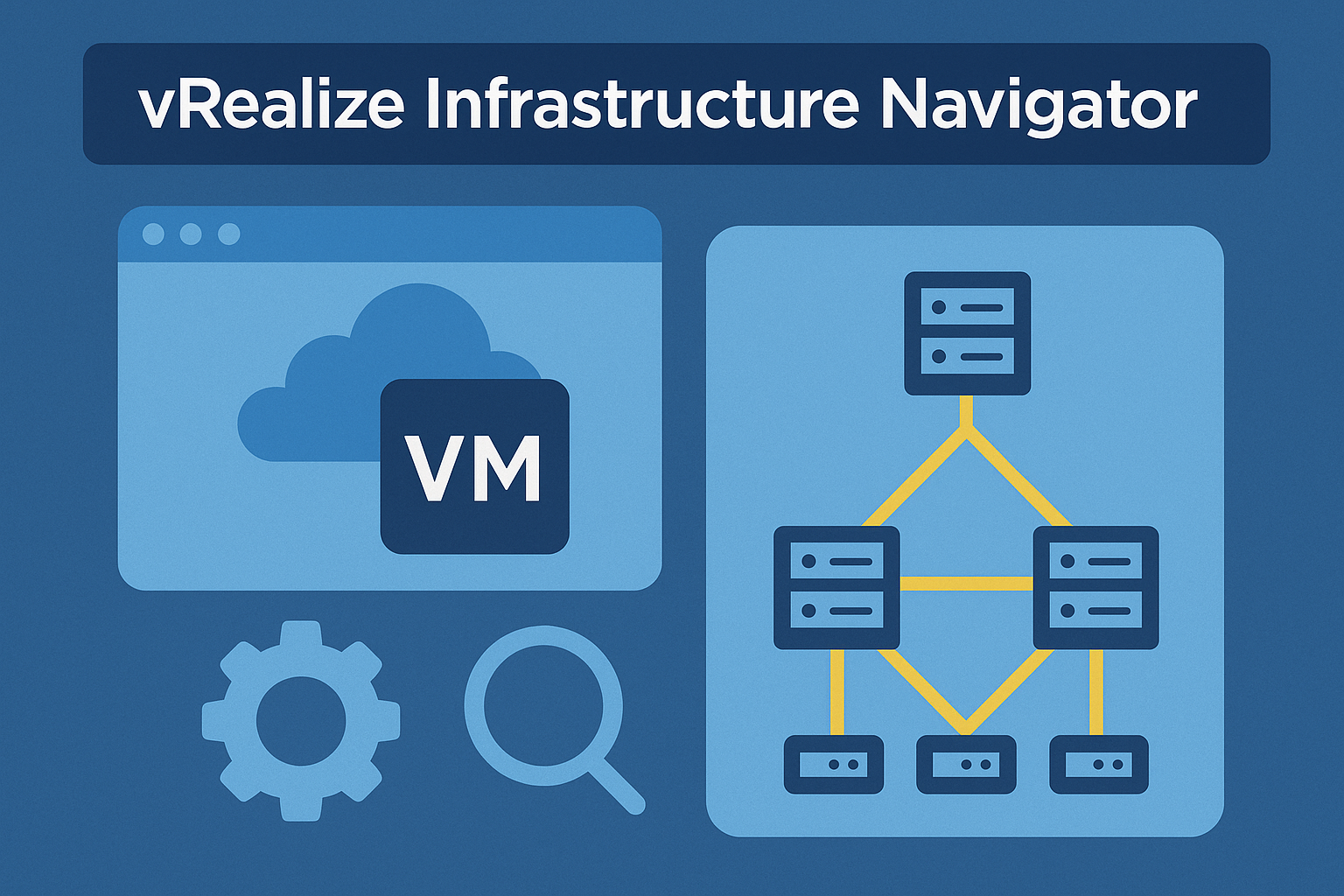
Topology Maps in the vSphere Web Client
VIN displayed easy-to-read diagrams that showed:
-
web servers
-
app servers
-
database servers
-
extra service layers
Continuous Monitoring
VIN kept watching the environment and updated maps when:
-
new apps started
-
ports changed
-
servers moved
-
workloads increased
Integration With VMware Tools and Inventory
VIN used data from VMware Tools and stored information in the vCenter Inventory Service.
How vRealize Infrastructure Navigator Works
VIN discovered apps and built maps by gathering information from several sources.
VIN Virtual Appliance
VIN came as an OVA appliance. After deployment, it connected to vCenter automatically.
Connection With vCenter and Hosts
VIN used:
-
vCenter APIs
-
ESXi data
-
VM metadata
to understand how the system worked.
Guest OS Inspection
VIN used VMware Tools to check:
-
running services
-
OS type
-
installed components
Network Traffic Analysis
VIN watched traffic to understand:
-
open ports
-
communication flows
-
VM-to-VM traffic
How VIN Builds Maps
VIN combined OS data and network data to create clear diagrams showing:
-
application layers
-
communication paths
-
dependency chains
Data Storage Inside vSphere
VIN saved signatures, service details, and relationships inside the vCenter system.
Deployment and Configuration Process
Understanding VIN’s setup helps explain how it worked.
System Requirements
VIN needed:
-
a supported vCenter
-
the vSphere Web Client
-
VMware Tools on VMs
Steps to Deploy VIN
-
Download the OVA
-
Deploy it in vSphere
-
Select storage
-
Choose network settings
-
Power on appliance
-
Register with vCenter
Network Configuration
VIN needed:
-
working DNS
-
correct time sync
-
access to VMs
Adding Guest Credentials
Admins added login details for deeper discovery:
-
Windows Admin credentials
-
Linux root/sudo credentials
Enabling Discovery
Once ON, VIN scanned VMs and found application services.
Checking the Installation
Admins verified:
-
VIN appears in Web Client
-
VM services detected
-
maps start showing data
Features for IT Operations
VIN helped operations teams work smarter and safer.
Impact Analysis Before Changes
VIN answered:
-
“What depends on this VM?”
-
“If I restart this, will an app break?”
Finding Multi-Tier Applications
VIN showed:
-
2-tier apps
-
3-tier apps
-
complex app stacks
Mapping VM and App Communication
VIN showed exactly which VM talked to which other VM.
Understanding Server Roles
VIN found roles like:
-
database
-
web server
-
app service
-
message broker
Tracking App Behavior Changes
VIN noticed when:
-
ports changed
-
new services appeared
-
apps started or stopped
Faster Troubleshooting
Teams could quickly see where issues came from.
Integration With Other VMware Products
VIN worked with many other VMware tools.
Integration With vCenter
VIN added app-level data into vCenter views.
Integration With vRealize vRealize Infrastructure Navigator Operations (vROps)
VIN gave vROps extra visibility into:
-
app health
-
service relationships
Integration With vRealize Network Insight (vRNI)
VIN helped vRNI create better:
-
flow diagrams
-
security plans
Integration With NSX
VIN supported:
-
firewall rules
-
micro-segmentation
-
network isolation
Integration With Site Recovery Manager (SRM)
VIN helped identify which VMs needed to fail over together.
VIN in the VMware Cloud Ecosystem
VIN added application awareness to many VMware solutions.
Use Cases and Real Examples
VIN was used in many everyday IT tasks.
Data Center Consolidation
VIN helped teams avoid breaking app connections when moving workloads.
Cloud Migration
VIN showed which VMs must migrate together.
Disaster Recovery
VIN supported DR planning by mapping application groups.
Security Hardening
VIN helped find:
-
unknown connections
-
unused ports
-
risky communication paths
Audits and Documentation
VIN created useful reports for audits and compliance.
Reducing Maintenance Risk
VIN made patching and updates safer.
Benefits of Using VIN
Better Visibility
VIN gave a clear view of all app connections.
Lower Risk
Teams avoided changes that could break systems.
Better Troubleshooting
Admins found problems faster.
Smarter Planning
VIN supported future upgrades and migrations.
Better Security
VIN made it easier to design safe networks.
Clear Communication
Maps helped explain systems to teams and managers.
Limitations of VIN
VIN had some limits that led to its retirement.
End of Life (EOL)
VIN officially ended in 2017, and VMware no longer supports it.
Limited App Recognition
VIN struggled with:
-
custom apps
-
cloud-native apps
-
containers
-
microservices
Old vSphere Web Client
VIN required the old Flex Client, not the modern HTML5 client.
vSphere Only
VIN did not support:
-
cloud platforms
-
multi-cloud
-
non-VMware hypervisors
Static Maps
Modern tools now offer dynamic, AI-powered maps that VIN could not match.
Not Ideal for Fast-Changing Systems
VIN sometimes missed very rapid changes.
Alternatives to vRealize Infrastructure Navigator
Today many tools replace VIN’s functions.
VMware Aria Operations (vROps)
Offers:
-
monitoring
-
app relationships
-
health scores
VMware Aria Operations for Networks (vRNI)
Provides:
-
network flows
-
advanced security planning
-
micro-segmentation design
Third-Party Tools
Examples include:
-
AppDynamics
-
Dynatrace
-
SolarWinds
Cloud-Native Dependency Mapping Tools
Used in:
-
Kubernetes clusters
-
microservices
-
container platforms
Why Companies Move to New Tools
Newer tools offer:
-
AI and ML insights
-
cloud support
-
better scale
Best Practices for Application Dependency Work
Document Relationships
Keep updated records of app dependencies.
Validate Maps Before Changes
Always confirm before:
-
upgrades
-
reboots
-
migrations
Use Clean Naming
Helps readability and searching.
Use Data for Better Security
Build better firewall rules from dependency knowledge.
Work With App Teams and Network Teams
Sharing information improves accuracy.
Review Dependencies Regularly
Systems change often, so maps must stay current.
Operational Roles That Used vRealize Infrastructure Navigator
VMware Admins
Used VIN for clarity and planning.
Application Owners
Used VIN to understand app behavior.
Network and Security Teams
Used VIN for segmentation and firewall rules.
Compliance Teams
Used VIN reports for audits.
Disaster Recovery Teams
Used VIN data to plan failover groups.
FAQs
What Problem Did vRealize Infrastructure Navigator Solve?
VIN solved the problem of hidden application connections inside virtual environments.
Why Did VMware Retire vRealize Infrastructure Navigator?
Technology changed, and VIN did not support modern clients or cloud needs.
Can vRealize Infrastructure Navigator Still Be Used?
VIN is not supported and is unsafe to use in new environments.
What Tools Replace vRealize Infrastructure Navigator?
VMware Aria Operations and Aria Operations for Networks.
Were vRealize Infrastructure Navigator Maps Accurate?
VIN was accurate for traditional VMs.
Did vRealize Infrastructure Navigator Support Cloud?
No, VIN worked only inside VMware vSphere.
Conclusion
vRealize Infrastructure Navigator was a helpful VMware tool that showed how applications and virtual machines were connected. It helped teams find hidden relationships, plan safer changes, improve security, and troubleshoot problems faster. Although VIN is now retired, its ideas are still used in modern tools. Understanding VIN helps IT professionals learn the basics of dependency mapping, which remains a very important part of IT operations, cloud migration, disaster recovery, and security planning.