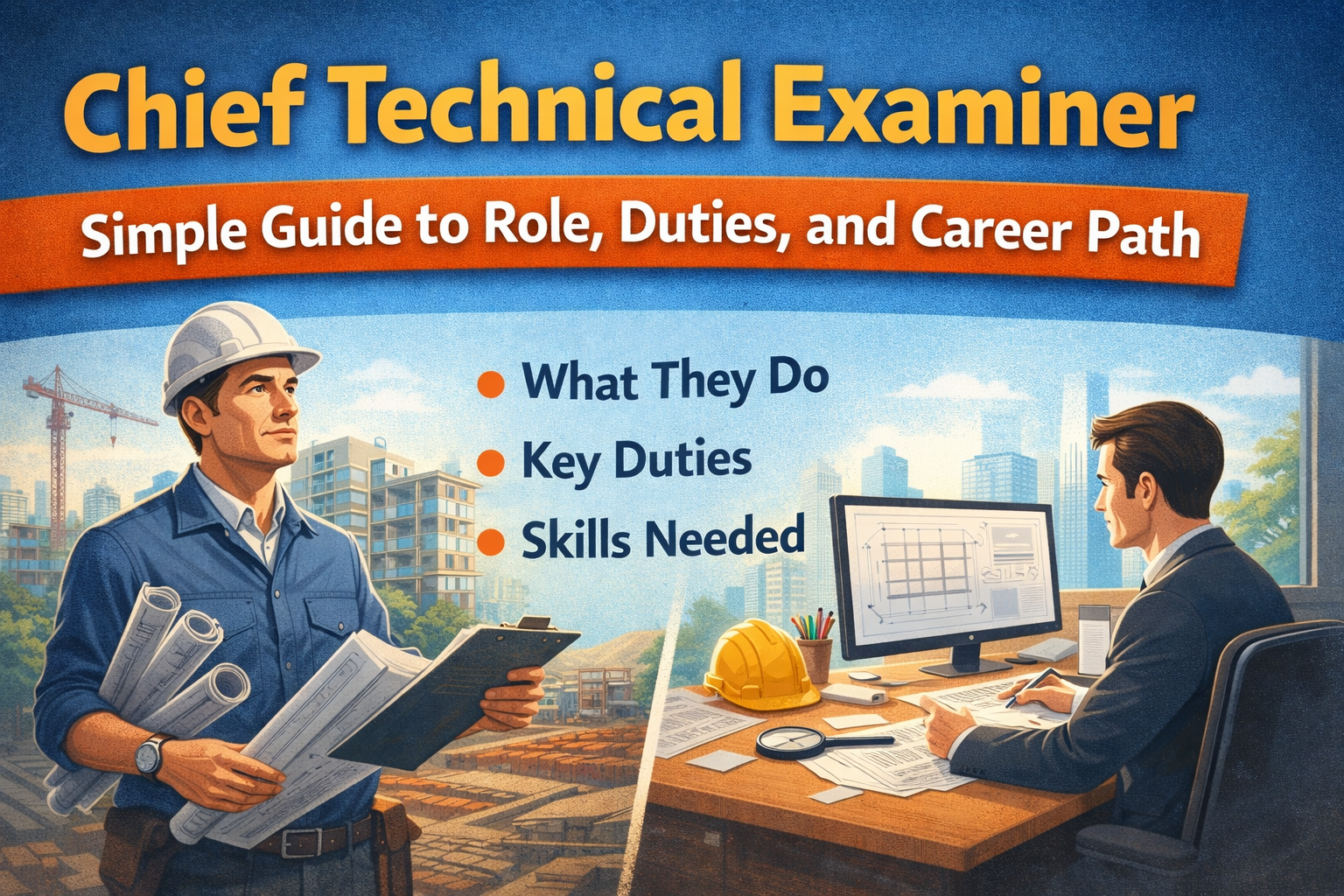
Chief Technical Examiner: Simple Guide to Role, Duties, and Career Path
Many people search for the term Chief Technical Examiner, but they are not sure what this role really means. Some think it is a government job. Others think it is a senior technical role in a private company. The truth is that a Chief Technical Examiner can work in both government and private organizations. The main job of a Chief Technical Examiner is to check technical work, make sure rules are followed, and help improve quality and safety.
In simple words, a Chief Technical Examiner is a senior person who reviews technical projects. This person checks designs, work quality, safety standards, and reports problems. The goal is to find mistakes early, reduce risks, and make sure projects are done the right way. This article explains the role of a Chief Technical Examiner in simple English. It covers duties, skills, work areas, challenges, and why this role is important Blazertje
What Is a Chief Technical Examiner
A Chief Technical Examiner is a senior technical professional who checks and reviews technical work. This role focuses on inspection, quality control, and compliance with rules and standards. The Chief Technical Examiner does not usually manage the whole project. Instead, this person looks at the work done by others and checks if it meets the required level of quality and safety.
The role of a Chief Technical Examiner can be found in:
-
Government departments
-
Public works and infrastructure projects
-
Construction companies
-
Manufacturing plants
-
Engineering and technology firms
The main purpose of the role is to protect quality and safety. By reviewing work and finding problems early, the Chief Technical Examiner helps prevent accidents, delays, and extra costs.
Main Roles and Responsibilities of a Chief Technical Examiner
The duties of a Chief Technical Examiner are wide and important. The role includes technical review, compliance checks, reporting, and team coordination.
Technical Review and Inspection
One of the main tasks is to review technical work. This includes:
-
Checking designs and technical drawings
-
Reviewing project plans and specifications
-
Inspecting materials and equipment
-
Visiting work sites to see how the work is done
The Chief Technical Examiner looks for mistakes, poor-quality work, and unsafe practices. This helps reduce future problems.
Compliance and Standards
The Chief Technical Examiner makes sure that projects follow required rules and standards. These may include:
-
Safety rules
-
Engineering standards
-
Industry codes
-
Legal requirements
Following standards helps protect workers, users, and the public. It also helps organizations avoid legal trouble.
Reporting and Documentation
Clear reports are very important in this role. The Chief Technical Examiner prepares:
-
Inspection reports
-
Audit findings
-
Lists of problems found
-
Suggestions for improvement
These reports help managers understand what is wrong and what needs to be fixed.
Team Leadership and Coordination
In many organizations, the Chief Technical Examiner leads or guides a team. This includes:
-
Assigning inspection tasks
-
Reviewing the work of junior examiners
-
Training new staff
-
Working with engineers, managers, and contractors
Good teamwork helps improve the quality of inspections.
Chief Technical Examiner in Government and Public Sector
In the government and public sector, the Chief Technical Examiner often works on large public projects. The focus is on transparency, safety, and correct use of public money.
Role in Public Projects
Public projects include:
-
Roads and bridges
-
Public buildings
-
Water and power systems
-
Transport infrastructure
The Chief Technical Examiner checks if these projects follow approved plans and quality standards.
How Government Inspections Work
Government inspections often follow a clear process:
-
Select projects for review
-
Collect drawings and documents
-
Visit the project site
-
Check materials and work quality
-
Write inspection reports
-
Suggest corrective actions
This process helps reduce waste and poor-quality work.
Benefits of the Role in Public Sector
The role helps:
-
Improve project quality
-
Reduce misuse of funds
-
Increase public trust
-
Improve safety of public assets
Chief Technical Examiner in Private Companies
In private companies, the Chief Technical Examiner focuses on quality control and risk management. The role supports business goals by reducing errors and failures.
Industries That Use Chief Technical Examiners
Many industries use this role, such as:
-
Construction and real estate
-
Manufacturing
-
Energy and utilities
-
Engineering services
-
Healthcare equipment
-
Technology and industrial products
Each industry has different standards, but the purpose of the role is the same: ensure quality and safety.
Difference Between Chief Technical Examiner and Other Roles
People often confuse this role with other senior technical jobs. The table below shows simple differences.
| Role | Main Focus | Main Responsibility |
|---|---|---|
| Chief Technical Examiner | Inspection and compliance | Checks quality and standards |
| Chief Technology Officer | Technology strategy | Leads technology planning |
| Quality Manager | Quality systems | Manages quality processes |
| Project Manager | Project delivery | Manages time, cost, and scope |
The Chief Technical Examiner works as an independent checker, not as a project leader.
Skills Needed for a Chief Technical Examiner
The role needs both technical skills and people skills.
Technical Skills
Important technical skills include:
-
Strong knowledge of engineering or technical fields
-
Understanding of standards and regulations
-
Ability to read technical drawings
-
Knowledge of inspection and audit methods
-
Risk assessment skills
Soft Skills
Soft skills help the Chief Technical Examiner work well with others:
-
Clear communication
-
Attention to detail
-
Problem-solving
-
Leadership
-
Fair and honest judgment
These skills help in explaining problems and guiding teams.
Education and Experience for This Role
Most Chief Technical Examiners have strong education and long experience.
Education
Common education paths include:
-
Degree in engineering
-
Degree in technology or applied sciences
-
Technical diplomas with long experience
Experience
Experience is very important. Many Chief Technical Examiners have:
-
Several years of technical work
-
Experience in inspections or audits
-
Experience in managing or guiding teams
How to Become a Chief Technical Examiner
This role is usually a senior position. It takes time and effort to reach this level.
Career Path
A simple career path may look like:
-
Junior engineer or technician
-
Mid-level technical role
-
Senior engineer or quality specialist
-
Chief Technical Examiner
Each step builds skills and experience.
Training and Learning
Continuous learning is needed. Helpful training includes:
-
Safety standards
-
Quality management
-
Inspection methods
-
Leadership training
Day-to-Day Work of a Chief Technical Examiner
The daily work of a Chief Technical Examiner includes both office work and site visits.
Typical Daily Tasks
Common tasks include:
-
Reviewing documents
-
Planning inspections
-
Visiting project sites
-
Talking with project teams
-
Writing reports
-
Following up on issues
Work Environment
The work environment may include:
-
Office work for reports
-
Field visits to sites
-
Meetings with teams and managers
This mix keeps the role active and varied.
Challenges Faced by Chief Technical Examiners
The role can be demanding.
Common Challenges
-
Handling complex technical issues
-
Working under time pressure
-
Dealing with disagreements
-
Keeping up with new standards
-
Balancing thorough checks with project speed
Strong professional judgment is needed to handle these challenges.
Importance of the Chief Technical Examinier Role
The Chief Technical Examinier plays an important role in protecting quality and safety.
Why This Role Matters
The role helps:
-
Improve safety of projects
-
Reduce technical failures
-
Save money by finding problems early
-
Increase trust in organizations
-
Support fair and transparent work
Tools and Methods Used by Chief Technical Examiniers
Chief Technical Examiniers use tools and methods to do their work well.
Common Tools
-
Inspection checklists
-
Audit templates
-
Technical standards documents
-
Measuring tools
-
Reporting software
Common Methods
-
Site inspections
-
Document reviews
-
Quality audits
-
Risk assessments
-
Follow-up checks
Comparison of Government and Private Sector Roles
The role changes slightly between government and private sector.
| Aspect | Government Sector | Private Sector |
|---|---|---|
| Main Goal | Public safety and accountability | Business quality and risk control |
| Project Type | Public infrastructure | Commercial projects |
| Reporting | Formal audits | Internal reports |
| Independence | High | Depends on company |
| Focus | Compliance and transparency | Quality and performance |
FAQs
What does a Chief Technical Examinier do
A Chief Technical Examinier checks technical work, makes sure rules are followed, and reports problems.
Is this role only in government
No. The role exists in both government and private companies.
What is the difference between Chief Technical Examinier and CTO
The Chief Technical Examinier checks quality and compliance. The CTO leads technology strategy.
What skills are most important
Technical knowledge, attention to detail, communication, and leadership are very important.
Is this a good career choice
Yes, for experienced technical professionals who enjoy quality, safety, and leadership work.
Conclusion
The Chief Technical Examinier plays a key role in making sure technical projects are done the right way. By checking work, following standards, and reporting problems, this role helps protect people, money, and resources. For professionals with strong technical backgrounds, this role offers a meaningful career path with real impact on quality and safety.