Social Media Silent Scroller Traits: Simple Guide to Quiet Social Media Users
If this sounds familiar, you’re not alone. A massive portion of social media users today are what researchers, marketers, and psychologists increasingly call social media silent scroller traits These are people who actively consume content on platforms yet rarely engage publicly. They don’t comment on posts, seldom like content, and almost never publish their own updates MLBBite
Despite their silence, silent scrollers make up the quiet majority of social media users. They influence trends, shape algorithmic performance through watch time and retention, and often make purchasing decisions based on what they consume—even if they never leave a visible trace of engagement
What Is a social media silent scroller traits
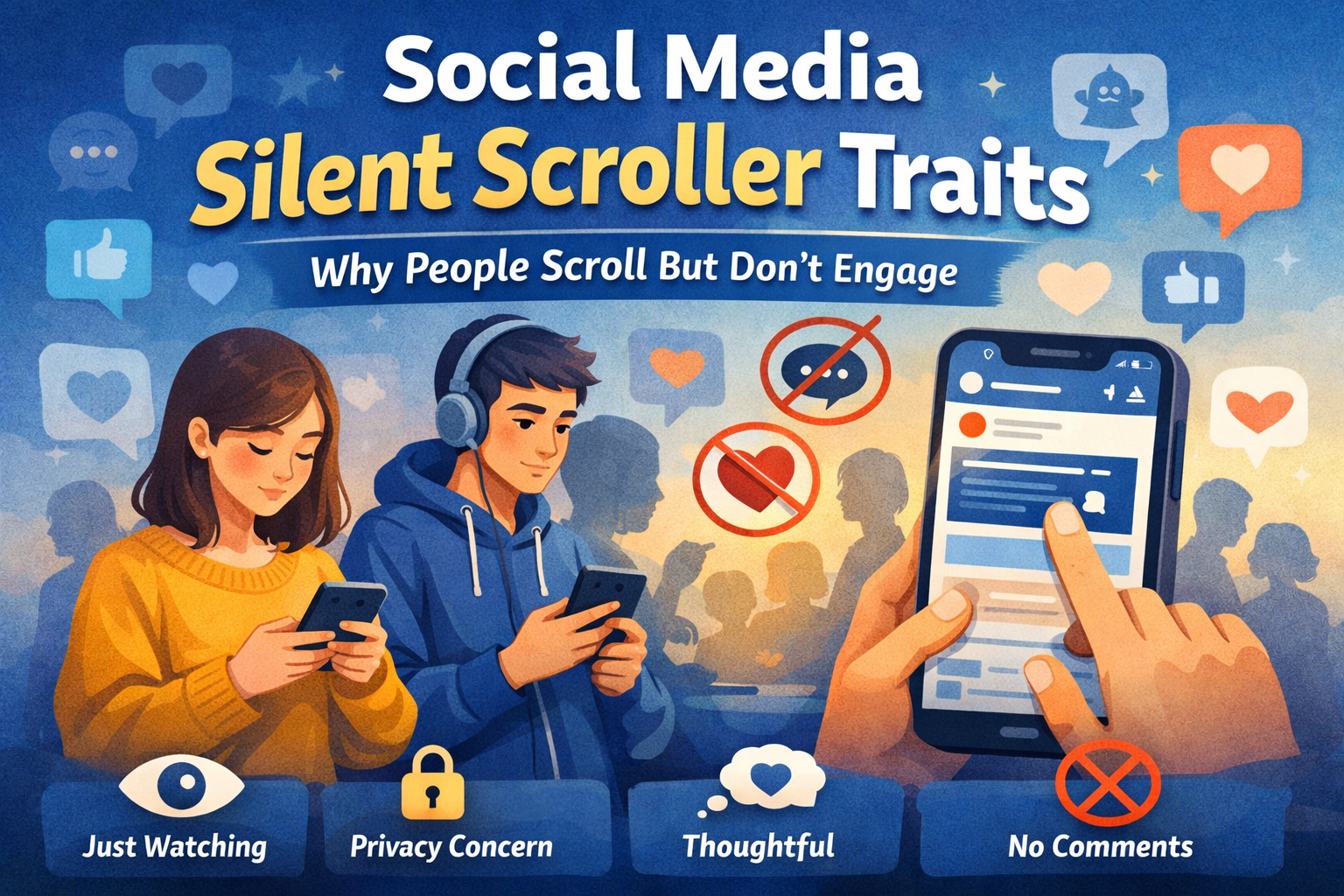
A silent scroller is a person who uses social media but does not interact much in public. They scroll, watch videos, read posts, and view stories, but they do not often like, comment, or post their own content. Silent scrollers are very common today. Many people use platforms like Instagram, TikTok, Facebook, YouTube, LinkedIn, and X every day, but they stay quiet. They may spend a lot of time on social media, even more time than people who post often. The difference is that their actions are mostly private.
Silent scrollers may still:
-
Watch videos to the end
-
Read long captions or posts
-
Save or bookmark content
-
Share posts in private messages
-
Click links
-
Follow pages or creators
Even though they do not show public engagement, they are still active users. This is why silent scrollers are very important for content creators and brands to understand.
Why Silent Scrolling Is Growing
Silent scrolling is becoming more common for several reasons. Social media has changed a lot in recent years, and people’s behavior has changed with it.
More Content and Less Time
There is now a huge amount of content online. People see hundreds or even thousands of posts every day. Because of this, many users choose to just scroll and watch instead of reacting to everything.
When there is too much content:
-
People feel tired
-
They become more selective
-
They stop reacting to every post
Fear of Judgment
Many people worry about being judged online. When someone likes or comments on a post, other people can see it. Some users feel uncomfortable with this level of public exposure.
Common fears include:
-
Saying the wrong thing
-
Being misunderstood
-
Getting negative replies
-
Being judged by friends, family, or coworkers
Because of this, many users choose to stay silent.
Privacy Concerns
People are more aware today that their online actions leave a digital trail. Likes, comments, and posts can be saved, shared, or used by others.
Silent scrollers often want:
-
More privacy
-
More control over their online image
-
Less personal information shared in public
Online Drama and Conflict
Social media can be full of arguments, negative comments, and heated debates. Many users do not enjoy this environment.
To protect their peace of mind, they:
-
Avoid comment sections
-
Do not join public debates
-
Choose to only watch content quietly
Main Traits of Social Media Silent Scrollers
Silent scrollers often share some common traits. These traits describe how they think, feel, and behave online.
Observer Mindset
Silent scrollers like to observe more than participate. They enjoy watching videos, reading posts, and learning from content without feeling the need to respond.
They often:
-
Follow trends quietly
-
Learn from others’ experiences
-
Watch how people react to different topics
This observer mindset allows them to stay informed without being involved.
Strong Privacy Values
Privacy is very important to many silent scrollers. They do not want their opinions or actions to be seen by everyone.
They often:
-
Avoid public comments
-
Do not share personal details
-
Keep their profiles simple
-
Limit who can see their activity
This helps them feel safe online.
Low Need for Public Attention
Silent scrollers do not usually seek attention on social media. They are not focused on getting likes or followers.
They may:
-
Feel comfortable being unseen
-
Not care about social media popularity
-
Use social media mainly for personal interest
This trait makes them different from people who enjoy being visible online.
Thoughtful and Reflective Thinking
Many silent scrollers think deeply about the content they consume. They may reflect on what they see instead of reacting right away.
They often:
-
Think before forming opinions
-
Compare different points of view
-
Take time to understand topics
This makes them more careful and thoughtful users.
Quiet Emotional Responses
Silent scrollers can feel strong emotions when they see content. They may feel happy, sad, inspired, or moved. However, they usually do not show these emotions in public comments.
Instead, they may:
-
Save posts they like
-
Share content privately with friends
-
Think about content in their own time
Avoidance of Online Conflict
Many silent scrollers avoid conflict. They do not want to get involved in arguments or negative discussions.
They may:
-
Skip comment sections
-
Avoid controversial topics
-
Block or mute negative accounts
This helps them protect their mental well-being.
Selective Engagement
Silent scrollers do engage sometimes, but only when content feels very meaningful to them.
They are more likely to engage when:
-
The topic is personal
-
The content feels helpful
-
The message feels safe and respectful
This means their engagement is rare but often genuine.
Table of Silent Scroller Traits
| Trait | Simple Explanation |
|---|---|
| Observer mindset | Likes to watch and learn instead of posting |
| Strong privacy values | Wants to keep personal actions private |
| Low need for attention | Does not seek likes or public approval |
| Reflective thinking | Thinks deeply about content |
| Quiet emotions | Feels emotions but does not show them publicly |
| Conflict avoidance | Stays away from online arguments |
| Selective engagement | Engages only when content feels important |
Why People Become Silent Scrollers
Silent scrolling is shaped by personal feelings, social pressure, and platform design.
Personal Reasons
Some people are naturally more private or shy. Others may have had negative experiences online in the past.
Personal reasons include:
-
Shyness or social anxiety
-
Past negative comments
-
Fear of making mistakes
-
Preference for privacy
Social Reasons
Social media can feel like a public stage. People may worry about how their actions look to others.
Social reasons include:
-
Pressure to appear perfect
-
Fear of criticism
-
Worry about how posts affect personal or work life
Platform Design Reasons
Social media platforms are designed to keep people scrolling. Many features support passive use.
Examples include:
-
Endless scrolling feeds
-
Auto-playing videos
-
Personalized content suggestions
These features make it easy to consume content without interacting.
Emotional and Mental Effects of Silent Scrolling
Silent scrolling can have both positive and negative effects on mental health.
Positive Effects
Silent scrolling can help people:
-
Avoid online stress
-
Protect their privacy
-
Feel less pressure to perform
-
Enjoy content quietly
For some people, this creates a calmer online experience.
Negative Effects
Too much silent scrolling can also cause problems.
Possible negative effects include:
-
Feeling lonely
-
Comparing oneself to others
-
Spending too much time online
-
Feeling emotionally tired
It is important to be aware of these risks.
Silent Scrollers and Other Social Media User Types
Different people use social media in different ways. Silent scrollers are just one type.
Table Comparing User Types
| User Type | Posting Style | Engagement Style | Main Behavior |
|---|---|---|---|
| Silent scroller | Rarely posts | Mostly private | Watches and reads quietly |
| Active poster | Posts often | Public comments/likes | Shares thoughts and content |
| Casual user | Posts sometimes | Light engagement | Uses social media occasionally |
| Influencer | Posts regularly | High public engagement | Builds an online audience |
| Lurker | Never posts | No engagement | Only watches content |
How Brands and Creators Can Reach Silent Scrollers
Silent scrollers are a large group of users. Brands and creators should not ignore them just because they do not comment or like posts.
Simple Ways to Reach Silent Scrollers
Brands and creators can:
-
Use clear and simple visuals
-
Share helpful or educational content
-
Create short and easy-to-watch videos
-
Use stories that people can relate to
-
Offer value without asking for comments
Low-Pressure Engagement Ideas
Instead of asking users to comment, brands can:
-
Ask simple yes or no questions
-
Encourage saving posts
-
Offer useful links
-
Provide free resources
These actions allow silent scrollers to engage without public pressure.
Healthy Social Media Habits for Silent Scrollers
Silent scrollers can enjoy social media in a healthy way by setting small boundaries.
Simple Tips for Healthier Use
-
Set daily time limits
-
Follow positive and helpful accounts
-
Unfollow content that causes stress
-
Take breaks from scrolling
-
Spend time offline with real people
These habits help create balance.
Common Myths About social media silent scroller traits
social media silent scroller traits do not care about content
This is not true. social media silent scroller traits often care deeply about what they see. They just do not show it publicly.
social media silent scroller traits are not valuable users
social media silent scroller traits still:
-
Watch content
-
Click links
-
Buy products
-
Share content privately
They are valuable to platforms and brands.
social media silent scroller traits are always unhappy
=social media silent scroller traits are not always unhappy. Many are simply private and thoughtful users.
FAQs
What are social media silent scroller traits?
Social media silent scroller traits describe the common behaviors of people who use social media without liking, commenting, or posting often. These traits include observing more than participating, caring about privacy, avoiding online conflict, and engaging only when content feels meaningful.
Why do people become social media silent scroller traits?
People become social media silent scroller traits for many reasons. Some want to protect their privacy. Others fear being judged or do not enjoy online arguments. Many people also feel tired from too much content and choose to scroll quietly instead of reacting to everything they see.
Are social media silent scroller traits inactive users?
No, social media silent scroller traits are not inactive users. They spend time watching videos, reading posts, saving content, and clicking links. Even without public likes or comments, they are still active and engaged with social media content.
Is silent scrolling bad for mental health?
Silent scrolling is not always bad for mental health. For some people, it reduces stress and pressure. However, too much silent scrolling can lead to problems like social comparison, loneliness, or spending too much time online. Balance and mindful use are important.
Conclusion
Social media silent scroller traits show us that many people use social media in a quiet way. They scroll, watch, and read, but they do not often like, comment, or post. This does not mean they are inactive or not interested. social media silent scroller traits are thoughtful users who care about privacy, avoid online conflict, and choose when and how to engage, understanding social media silent scroller traits helps creators, brands, and everyday users. Creators can make content that feels safe and useful. Brands can measure success in more ways than likes and comments. Users can better understand their own habits and build healthier ways to use social media.